I guess what I'm wondering today is this.
When talking about Christian celebrities (whether they claim to associate themselves in some way with the Christian faith or whether these beliefs are attributed to them), many Christians dismiss certain ones. Let me know if this sounds familiar to you:
"Well, [insert celebrity's name here] isn't really a good example."
"[That celebrity] probably isn't really a Christian. He/She can't be. He/She [insert sin here]. He/She claims to be a Christian but his/her life shows otherwise."
And so we have people like the Catholic Mel Gibson, who has given us such work as "The Passion of the Christ," but we have no desire to associate ourselves with him because of comments he made publicly, his highly publicized divorce, alleged affairs and the list could keep going.
I also think of Jon Gosselin - the reality television star parent of eight children with his wife, Kate. People referenced the couple's faith frequently until it was made public that the couple was filing for divorce and, subsequently, stories began coming to light of Jon's alleged affairs and relationships with other women.
I'm not condoning their behavior. I am not advocating looking to celebrities as role models, but I am also not saying that it should not be done. I am not saying that these celebrities should be role models. I am not saying that they should not be. All I am wondering about today is this.
Why do we vilify them? Why are we so quick to turn our backs and unidentify ourselves from them? What gives us the right to question whether or not they have faith or what their relationship with God is like?
Maybe I'm completely off base. But that's what I'm wondering about today.
Tuesday, May 8, 2012

Sunday, April 15, 2012
Destination: Staunton
My plans for this summer are closer to being finalized!
I had five potential options for the summer by the time February rolled around. As a theatre major, I started to realize during my sophomore year that my summers during college were going to be extremely valuable, and that I should use them in the most effective way possible while I had them. They're a time when I'll be able to do theatre-related things without necessarily having to get paid (in real money) just yet. Once I graduate I'll have more pressing matters to deal with, like paying for a place to unpack my suitcase and maybe cook some Ramen noodles. Not to mention finding some way to be able to pay for clothes to go in the suitcase and for the Ramen noodles.
But, during my summers in college, it's a little bit of a different story. I don't have to worry about supporting myself independently just yet. Meaning that I can do things like internships for credit. Granted, it would be awfully nice to do something to further my career that also pays real money, but that didn't seem to pan out for this summer.
 Before Christmas, I applied for internships at the Goodman Theatre and the Lookingglass Theatre in Chicago, and the American Shakespeare Center in Staunton, Virginia. All would be unpaid internships completed for academic credit with IWU. Only one internship is required to graduate and I actually already completed my internship last summer, stage managing for Minnetrista. But I am allowed to do up to two.
After the auditions in February, I ended up not getting an offer from Great River Shakespeare Festival in Winona, Minnesota. I did get an offer for employment from Missoula Children's Theatre in Missoula, Montana, but I decided that my second choice would be the American Shakespeare Center instead because 1) Missoula, while it would no doubt be fun and memorable (and would pay me), probably would not do a whole lot for my career and 2) I'm fairly certain I want to apply for the Shakespeare and Performance MFA program at Mary Baldwin College in Staunton which has a partnership with the ASC, and this seems like a good way to get my foot in the door.
Long story short, I got an offer from ASC, accepted, and turned down Missoula. I did a phone interview with someone from Lookingglass and they said they would get back to me the next day but I still haven't heard anything back from them, so I doubt that's a positive sign. I haven't heard anything at all from Goodman, which is fine (and not wholly unexpected).

Last week I got a call from the ASC outlining what my internship would look like and discussing possible dates. I was named Production Assistant for their upcoming production of "Two Gentlemen of Verona," (and one of my responsibilities will be some dog handling! I don't know why but I found that exciting), and then was also told that the second part of my internship would consist of helping the ASC develop a program to market their theatre on college campuses. The Production Assistant position will go be from June 11-July 13 - the rehearsal period for "Two Gents," but I've set my tentative dates from June 11-July 25, probably heading down a few days earlier to get my bearings, and then leaving about 12 days or so after the Assistant-ship is done to work on the marketing.
I'm excited! I think it'll be a great experience. And it won't be the entire summer, which is nice, and should leave me at least a little time to work on Rachel Corrie.
Auditions this week for Much Ado About Nothing next fall - we'll see how things go.
My costume pieces have been pulled together and distressed for my creation of Eliza Doolittle from My Fair Lady. I had a very interesting day with mud and a cheese grater.
Advanced Acting Shakespearean scene performances this week - my scene partner and I are performing Helena and Hermia from A Midsummer Night's Dream.
And, most pressing, I have a critical essay/research paper on Merchant of Venice due tomorrow that I've started on but still have a way to go. It could be a long night and day tomorrow (and I may or may not end up skipping a class or two).
Yo ho, yo ho, a thespian's life for me.
I had five potential options for the summer by the time February rolled around. As a theatre major, I started to realize during my sophomore year that my summers during college were going to be extremely valuable, and that I should use them in the most effective way possible while I had them. They're a time when I'll be able to do theatre-related things without necessarily having to get paid (in real money) just yet. Once I graduate I'll have more pressing matters to deal with, like paying for a place to unpack my suitcase and maybe cook some Ramen noodles. Not to mention finding some way to be able to pay for clothes to go in the suitcase and for the Ramen noodles.
But, during my summers in college, it's a little bit of a different story. I don't have to worry about supporting myself independently just yet. Meaning that I can do things like internships for credit. Granted, it would be awfully nice to do something to further my career that also pays real money, but that didn't seem to pan out for this summer.
After the auditions in February, I ended up not getting an offer from Great River Shakespeare Festival in Winona, Minnesota. I did get an offer for employment from Missoula Children's Theatre in Missoula, Montana, but I decided that my second choice would be the American Shakespeare Center instead because 1) Missoula, while it would no doubt be fun and memorable (and would pay me), probably would not do a whole lot for my career and 2) I'm fairly certain I want to apply for the Shakespeare and Performance MFA program at Mary Baldwin College in Staunton which has a partnership with the ASC, and this seems like a good way to get my foot in the door.
Long story short, I got an offer from ASC, accepted, and turned down Missoula. I did a phone interview with someone from Lookingglass and they said they would get back to me the next day but I still haven't heard anything back from them, so I doubt that's a positive sign. I haven't heard anything at all from Goodman, which is fine (and not wholly unexpected).

Last week I got a call from the ASC outlining what my internship would look like and discussing possible dates. I was named Production Assistant for their upcoming production of "Two Gentlemen of Verona," (and one of my responsibilities will be some dog handling! I don't know why but I found that exciting), and then was also told that the second part of my internship would consist of helping the ASC develop a program to market their theatre on college campuses. The Production Assistant position will go be from June 11-July 13 - the rehearsal period for "Two Gents," but I've set my tentative dates from June 11-July 25, probably heading down a few days earlier to get my bearings, and then leaving about 12 days or so after the Assistant-ship is done to work on the marketing.
I'm excited! I think it'll be a great experience. And it won't be the entire summer, which is nice, and should leave me at least a little time to work on Rachel Corrie.
Auditions this week for Much Ado About Nothing next fall - we'll see how things go.
My costume pieces have been pulled together and distressed for my creation of Eliza Doolittle from My Fair Lady. I had a very interesting day with mud and a cheese grater.
Advanced Acting Shakespearean scene performances this week - my scene partner and I are performing Helena and Hermia from A Midsummer Night's Dream.
And, most pressing, I have a critical essay/research paper on Merchant of Venice due tomorrow that I've started on but still have a way to go. It could be a long night and day tomorrow (and I may or may not end up skipping a class or two).
Yo ho, yo ho, a thespian's life for me.
Friday, April 13, 2012
Deborah Brevoort, Playwright of "The Women of Lockerbie"

- Lockerbie was the first terrorist attack on American interests - a defining moment in American history
- The terrorist bomb was implanted in a Toshiba radio
- There were 38 women of Lockerbie
- The laundry project of washing the clothes took about 9 months to a year to complete
- She first heard about/started thinking about the laundry project in 1998, ten years after the incident
Regarding the laundry project: "I couldn't believe I had never heard about this, that I thought was one of the most breathtaking gestures I had ever heard of."
"I wrote the play because I was so moved by the story."
Regarding: "why I write, how I write" -
"It's an exploration of something I don't know, something I don't understand."
"I don't begin with any kind of agenda at all."
"When I go to the theatre, I like to encounter a story and figure out my own meaning to take away from it, so that's the way I write."
"I don't write what I know; it would be boring for me to do that."
"I wanted to find out how you go through something like this and not be broken."
"If writers don't surprise themselves, they can't expect to surprise anyone else."
On Greek tragedy -
"I was seized by the idea of writing this story as a Greek tragedy."
"I had a hunch that the Lockerbie story was well-suited to this form."
- It took her 4 years and 25 drafts to write "The Women of Lockerbie."
Greek style:
1) Episode
2) Dialogue
3) Ode
"Stories like this are hard for an audience. Greek tragedy gives us a format for us to get through them."
- An episode contains the uncomfortable material - the stuff it's hard to get through.
- The dialogue is like a cooling device - the chorus reflects on the hard stuff.
- The ode is a song - a release. It cleanses the heart.
"Greek theatre was designed to tell the horrible stories."
"One of the struggles I kept running into was sinking back into naturalism or realism. When I did that, it began to become melodrama."
Question: "Most Greek tragedies are real downers, but your play leaves the audience with hope. Was that something you made a conscious decision to do?"
Her response: "Really I just followed the characters and the form. In real life, the people had found a way to come out of the darkness. That's how the story went. But I'm going to disagree with you about Greek tragedy. I think tragedy is the most hopeful form of theatre. A comedy only stops before the tragedy begins. But there's always something gained at the end of a tragedy. The price is always horrific, but something is always gained."
"I didn't write 'The Women of Lockerbie' with an agenda. Some people think I wrote the play as a political critique of the State Department. Some people think I wrote it as a Christian text. There are Christian values and ideologies, no doubt. But I'm more interested in writing characters into circumstances and writing them truthfully."
On why she likes to visit college campuses producing her play: "You're showing me things about my work that I didn't know before. This work is bigger than just me."
On writing characters in plays: "I think that if you're not inhabiting your characters, you're judging them."
Question: "Do you have a favorite character that you wrote? Like how you know you're not supposed to have favorite kids but everybody kind of does?"
Her response: "No, I really don't have a favorite. I'm fond of them all. They're all a part of me."
Question: "How did you make this play relevant to audiences?"
Her response: "I had the hardest time getting this play produced. People thought I was being morbid. And then September 11th happened. And suddenly, people understood. People in other countries understand the character of Maddie. The rest of the world has been ravaged by war. We've largely been spared. But suddenly people started to understand."
"The theatre's not about being historically accurate; it's about telling the truth."

"I didn't want the responsibility of journalism put on the play. I wanted to tell the story."
(RACHEL CORRIE!!!)
And finally -
Question: "What is your favorite play?"
Her response: "Oh there are so many. My three: 'A Streetcar Named Desire,' 'A Raisin in the Sun,' and 'Butterfly.'"
Wednesday, April 11, 2012
Follow-Up Thoughts on "World Changer"

"I thought Kirk Cameron did well today. He spoke from his heart, and I admire that.
He encouraged others to stand for their convictions, and I applaud him for exemplifying that.
I may not have the same convictions as he does, but that doesn't mean that I won't affirm him as my brother.
I may disagree with him on his methods and some of his stances, but I will support his ultimate cause to serve God as best as you can with your life."
I also seriously do have this question, however:
 In response to the ceremony today, and I imagine in response to naysayers of Mr. Cameron, IWU's Twitter re-tweeted a student who quoted Romans 14:4 - "You cannot judge another person's servant. The master decides if the servant is doing well or not..."
I love the Romans 14 passage and have even talked about it here before. And I agree. It should be in God's hands to judge his servants. And, in this light, I am certainly guilty of judging the effectiveness of someone else's servant.
The cool thing is that, as much as I find this truth convicting, I also find it comforting.
If, however, we use this verse in support for certain inductees, I see a need to look at the other side of the coin as well. The master decides if the servant is doing well or not. Not IWU's board of trustees. Not IWU faculty or staff. Not IWU students. Not the church. Not Christians. The master.
It also poses the question: if it is God's to judge the effectiveness of his servants, why are we giving a "world changer" award in the first place?
Friday, April 6, 2012

Saturday, March 31, 2012
My collected thoughts on "World Changer"
Warning: this post is excessively long.
Okay I warned you.
IWU's theme is "World Changers." According to their website, "The concept of being world changers and developing world changers permeates everything we do at IWU. Whether you are a student, an employee, an alumnus, or a guest at IWU, we are striving to bring out the world changer in you."
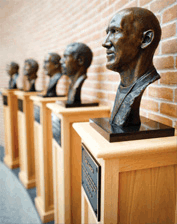
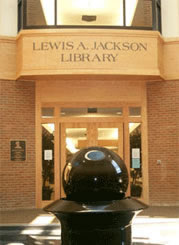 In the library, around the watery spinny globe, are strategically placed bronze busts of all the past recipients of the "World Changer" award. The award was first granted in 2003 "to recognize role models who have exemplified the concept of world changers and whose lives can serve as an inspiration to future generations."
 Again, according to the website, "The idea for the Society of World Changers sprang from a campus-wide conversation about the book Roaring Lambs, written by the Society’s first inductee, the late Robert Briner. The book challenged believers to live out their faith boldly in the hustle and bustle of their everyday world—and to engage head-on a culture that is often indifferent, if not antithetical, to the Christian worldview."
In the library, around the watery spinny globe, are strategically placed bronze busts of all the past recipients of the "World Changer" award. The award was first granted in 2003 "to recognize role models who have exemplified the concept of world changers and whose lives can serve as an inspiration to future generations."  Again, according to the website, "The idea for the Society of World Changers sprang from a campus-wide conversation about the book Roaring Lambs, written by the Society’s first inductee, the late Robert Briner. The book challenged believers to live out their faith boldly in the hustle and bustle of their everyday world—and to engage head-on a culture that is often indifferent, if not antithetical, to the Christian worldview."
 So! With that prior knowledge in mind, let me name for you the recipients from 2003 until the present date of the "World Changers" award:
- 2003 Robert Briner, "He Wrote the Book: awarding-winning TV producer, sports executive, and author"
- 2004 Frank Peretti, "A Publishing Phenomenon: bestselling... Christian suspense novelist"
- 2005 Dr. James Dobson, "A Family Man: founder and chairman-emeritus of Focus on the Family"
- 2007 Dr. Benjamin Carson, "The Doctor: director of pediatric neurosurgery and professor of neurosurgery, oncology, plastic surgery and pediatrics at the Johns Hopkins Medical Institutions"
- 2008 Tony Dungy, "An Uncommon Coach: he led the Indianapolis Colts to Super Bowl victory in 2007, the first such win for an African-American coach"
- 2009 Joni Eareckson Tada, "From Her Wheelchair, She Has Moved the World for Those with Disabilities: she was paralyzed at 17 in a diving accident, but since then has written 35 books, accepted a presidential appointment to the National Council on Disability, spoken in more than 45 countries, established a disability ministry that reaches around the world and produced paintings with a brush between her teeth"
- 2010 Bill and Gloria Gaither, "Changing the World One Song at a Time: the American Society of Composers, Artists and Publishers (ASCAP) named them 'Songwriters of the Century' - Unquestionably, Christian music falls into two categories: Before Gaithers (B.G.) and After Gaithers (A.G.)"
- 2011 S. Truett Cathy, "Founder and chief executive officer of Chick-fil-A, Inc."
And this year's recipient? Why, none other than Kirk Cameron, "an American actor best known for his role as Mike Seaver on the television situation comedy Growing Pains (1985–1992)," according to the all-knowing Wikipedia.
And now, a word. I apologize if, in the remainder of this post I sound cynical, heretical, harsh, critical, unchristian, unpatriotic, or any other such negative-type adjective you would care to put there. I am not writing with the intent to be such. I will be discussing my opinions, and hopefully working through why I hold them. And, as always, if someone is under the impression that I've stepped out of line, I invite correction. Call me out.
The term "World Changer," though empowering, potentially carries with it a connotation of superiority or arrogance. Understood in its intended sense, I agree -- that wherever followers of Jesus Christ end up they should be leaving impressions that ultimately glorify Him. What changing one's world actually looks like, however, seems to be up for interpretation. Unfortunately, in the back of my mind the words "colonialism" and "crusade" pop up before I have the chance to brush them away.
colonialism
— n
Also called: imperialism - the policy and practice of a power in extending control over weaker peoples or areas
crusade
— n
any of the military expeditions undertaken by the Christians of Europe in the 11th, 12th, and 13th centuries for the recovery of the Holy Land from the Muslims
If we march out into the world waving a banner and claiming to hold some kind of elitist superiority over people that we are appointed to "change," I just get this sinking feeling in the pit of my stomach that we'll do more harm than help.
Growing up out of the United States, I was exposed to a so-called "third world" country's attitude toward my "home" country.
A lot of people don't like us. There is an opinion out there that we're a bunch of arrogant snobs who think we run the world and that no one else would ever be qualified to do so. I'm in the history class American Civ After 1865 this semester and, as I reflect on U.S. foreign policy over the years, I'm starting to see more and more clearly why the opinion exists. Going back even to The Women of Lockerbie, the play I'm in right now, the Scottish characters say to an American government official who claims to have their best interests in mind:
OLIVE: The Scottish people are quite capable
of looking out for our own welfare, Mr. Jones.
We don't need you or the American government
to do that for us.
HATTIE: This is why no one likes Americans, sir.
You think you know what's best for everyone.
WOMAN 1: Aye. This is Scotland!
WOMAN 2: The American government should have no say
about what happens over here!
And I wonder if American Christians, specifically, are brought up with this deep-seated superiority embedded into their framework. Take one of my recent posts on the persecution complex I've observed in evangelical Christians. Anytime our established superiority (hegemony) seems to be threatened, we have immediately snapped to the offensive, and we have often left wounds and scars that drive away the very people we say we want to help. I recognize that this is not always the case. That Americans and Christians both are responsible for a lot of good that has been done in this world. But I also can't overlook an opinion about our attitude that seems to ring so true. An attitude that I don't want to be guilty of perpetuating.
If a "world changer" is one who leaves this place to go out and try to make other people look exactly like me and do things exactly the way I do things and think exactly the way I think, I don't want to be a part of it. Now, before I say anything else that might get me accused of being un-American, back to the award and to the recipient-to-be, Cameron.
I have no doubt that Kirk Cameron is a wonderful human being. I value and appreciate him as such, and I am happy for him in the successes that he has had in his life. I appreciate that he has a relationship with God.
Do I agree with the way he has purportedly "changed the world"? No, no not really.
As he came into adulthood, Cameron became an outspoken evangelist. He partnered with evangelist Ray Comfort, apparently subscribing to and promoting Comfort's messages and means. They founded their ministry The Way of the Master together, and have undertaken many evangelistic projects together.
I object strongly to Ray Comfort and to the way he goes about doing things.
His book titles say it all for me: You Can Lead an Atheist to Evidence, But You Can't Make Him Think, How to Know God Exists, God Doesn't Believe in Atheists, and Evolution: The Fairy Tale for Grownups. Those titles scream arrogance and elitism. They seem to say, "I am enlightened and you are ignorant." And if I'm not mistaken, that's not the kind of attitude we should be shooting for.
Comfort and Cameron participated in a debate, pieces of which aired on Nightline, along with atheists Brian Sapient and Kelly O'Conner, which centered on the existence of God. According to Wikipedia, again, "Comfort stated he could prove [the existence of God] scientifically, without relying on faith or the Bible." You don't believe me? Please watch Cameron's opening statement of the debate (approximately 0:07 to 0:50).
I have a huge problem with that statement. It undermines the entire concept of "Christian faith." A friend of mine who wrote an award-winning opinion article about his objection to the choice of Cameron for the "World Changers" award put it this way: "I’m sure I’m not the only person of faith who takes issue with that claim."
And if you go on to watch the whole video, you will see that the atheists do not come off as ignorant, but, unfortunately, Cameron and Comfort seem to.
And if you go on to watch the whole video, you will see that the atheists do not come off as ignorant, but, unfortunately, Cameron and Comfort seem to.
In 2009, on the 150th anniversary of the publication of Darwin's On the Origin of Species, Cameron helped distribute altered versions of the book at one hundred universities in the United States. The altered version had four important chapters omitted, and a 50-page introduction written by Ray Comfort. Wikipedia: "According to Comfort's website, 'Nothing has been removed from Darwin's original work,' but Eugenie C. Scott, executive director of the National Center for Science Education, noted that Comfort deleted four chapters by Darwin that described the evidence for evolution, adding that two of the omitted chapters, Chapters 11 and 12, showcase biogeography, some of Darwin's strongest evidence for evolution. She wrote that Comfort's foreword is 'a hopeless mess of long-ago-refuted creationist arguments, teeming with misinformation about the science of evolution, populated by legions of strawmen, and exhibiting what can be charitably described as muddled thinking.'"
If you have the time, here is the video featuring Kirk promoting it. And, if you have even more time, here is a blog post by Rachel Held Evans, an author, speaker, and blogger, responding to the video. She starts her post by saying, "You know that feeling you get when your sweet, 90-year-old grandmother makes a blatantly racist comment at Thanksgiving dinner or your creepy uncle starts rambling about how the moon landing was staged? You are no doubt familiar with the spontaneous full-body wince that inevitably follows an interview with Al Sharpton in which he claims to represent all African Americans, Michael Moore in which he claims to represent all liberals, or Ann Coulter in which she claims to represent all Christians. Whether it’s a politically incorrect relative or a cartoonish pundit, there are just some people who make you want to stand up and shout, 'Shut up before people start to think that we’re all like you!'"
I must admit, that has become the exact sentiment I have when it comes to the IWU-World-Changer-to-be.
She goes on to name six stereotypes of evangelical Christians that Cameron seems to perpetuate within the six minutes of the promotional video: 1) Evangelicals suffer from the delusion that they face religious persecution in the U.S. (Did I hear an echo?), 2) Evangelicals are unable to make a distinction between atheism and evolution, 3) Evangelicals love drawing fallacious cause and effect conclusions regarding other belief systems, but have a selective memory when it comes to their own beliefs and history, 4) Evangelicals have little respect for science, 5) Evangelicals always have an agenda, and 6) Evangelicals use fear and patriotism as tools for manipulation to call their people to action.
I also object to some things Cameron has done in his acting career. Again, according to Wikipedia, "Cameron was an atheist in his early teens, but when he was 17, during the height of his career on Growing Pains, he developed a belief in God, and became a born-again Christian. After converting to Christianity, he began to insist that story lines be stripped of anything he thought too adult or racy in Growing Pains."
As an aspiring actor who also has faith in God, this is unsettling to me. Should our faith mean that we also have standards? Yes. But I also said that if a "world changer" is someone who goes out and tries to make other people look exactly like me and do things exactly the way I do things and think exactly the way I think, I don't want to be a part of it. This is what Cameron tried to do. He tried to impose his own standards on others who had no reason to adhere to them. It, again, conveys that sense of superiority. Looking down on people for not making moral choices. And now this goes straight back to my art and faith tension again.
Some of the names on the list of people who have received the award, in my mind, would be rather better described as "evangelical-Christian-subculture-changers." They have had a great following of Christians, but they do not fare so well with the rest of the world that they happen to live in. That's not to say that there's not a place for ministry to fellow Christians and that we shouldn't edify each other. I'm not saying that at all. Of course there's a place for it. But why are we giving such people "World Changer" awards? Dr. James Dobson seems to fall in this category, as well as Bill and Gloria Gaither, and definitely Kirk Cameron.
Some of the names on the list of people who have received the award, in my mind, would be rather better described as "evangelical-Christian-subculture-changers." They have had a great following of Christians, but they do not fare so well with the rest of the world that they happen to live in. That's not to say that there's not a place for ministry to fellow Christians and that we shouldn't edify each other. I'm not saying that at all. Of course there's a place for it. But why are we giving such people "World Changer" awards? Dr. James Dobson seems to fall in this category, as well as Bill and Gloria Gaither, and definitely Kirk Cameron.
Near the beginning of this post, I said that what changing one's world actually looks like seems to be up for interpretation. I think it's becoming crystal clear that IWU and I have different ideas indeed.
Sunday, March 18, 2012
The Women of Lockerbie
As I've said previously, I will have the privilege of playing the role of Hattie in my friend Emily's senior project, The Women of Lockerbie by Deborah Brevoort this April 12-14.
 I read the script for the first time last fall. It's written in the style of a Greek tragedy and full of very poetic, symbolic, and flowing language. The more I read the script, the more I find in it. I hope you're planning to come see the show, because I think it's going to be fantastic. As a preview, however, I wanted to share a little bit about why I'm glad I'm involved with this production.
“When evil comes into the world
it is the job of the witness
to turn it to love.”
“If the sun never set
we would find no beauty in the sunrise.”
“And if hatred never pierced our hearts
we would not know the power of love.”
“Trust in the rising sun
and in the stars that shine at night.”
“And believe
that behind the suffering of the world,
there is a purpose
to everything.”
“My faith is hanging by a thread
again
ready to break.
How easily my faith is broken...”
“It breaks often, my faith.”
"But in the morning
when the first rays of sun hit my window...
it is restored."
“The world won’t let you keep your faith
but it won’t let you lose it, either.”
GEORGE: You are very strong.
I wouldn’t have been able to do that.
OLIVE: Sure you would have.
You find the strength to do what you have to, Mr. Jones.
“Hatred is love that’s been injured.
If you have hatred in your heart
it means you have love in it also.”
“We are going to wash the clothes, Mrs. Livingston.
To make our hearts pure again.”
“’Hatred will not have the last word in Lockerbie.’”
These lines are why I want to be a part of telling this story. My character does not deliver any of these lines, but I also know that the play would not be complete without the piece that Hattie brings to it. Hattie is like the rays of sunshine coming in through the window in the morning, but she’s also brave, willing to sacrifice, and very strong. I hope I learn some lessons from Hattie before we’re through.

“When evil comes into the world
it is the job of the witness
to turn it to love.”
“If the sun never set
we would find no beauty in the sunrise.”
“And if hatred never pierced our hearts
we would not know the power of love.”
“Trust in the rising sun
and in the stars that shine at night.”
“And believe
that behind the suffering of the world,
there is a purpose
to everything.”
“My faith is hanging by a thread
again
ready to break.
How easily my faith is broken...”
“It breaks often, my faith.”
"But in the morning
when the first rays of sun hit my window...
it is restored."
“The world won’t let you keep your faith
but it won’t let you lose it, either.”
GEORGE: You are very strong.
I wouldn’t have been able to do that.
OLIVE: Sure you would have.
You find the strength to do what you have to, Mr. Jones.
“Hatred is love that’s been injured.
If you have hatred in your heart
it means you have love in it also.”
“We are going to wash the clothes, Mrs. Livingston.
To make our hearts pure again.”
“’Hatred will not have the last word in Lockerbie.’”
These lines are why I want to be a part of telling this story. My character does not deliver any of these lines, but I also know that the play would not be complete without the piece that Hattie brings to it. Hattie is like the rays of sunshine coming in through the window in the morning, but she’s also brave, willing to sacrifice, and very strong. I hope I learn some lessons from Hattie before we’re through.
Subscribe to:
Posts (Atom)